Hail Damage Roof Repair in Wichita Falls, TX (2026): Inspections, Insurance Claims, Permits and Storm-Chaser Red Flags
What to do after hail hits your Wichita Falls, Burkburnett or Iowa Park roof: ground-level documentation, Texas claim deadlines, the city's 500-square-foot permit rule, realistic costs, Class 4 discounts and the storm-chaser red flags Texas law spells out.
Vanguard Merchants Editorial Team · November 28, 2026 · 11 min read · Updated November 28, 2026
Key takeaways
- Photograph hail damage from the ground, tarp active leaks and report the claim quickly; stay off the roof.
- Texas insurers have 15 business days to acknowledge a claim, 15 more to decide once they have what they need, and 5 to pay.
- Wichita Falls requires a contractor-pulled permit for roof replacement or repairs over 500 square feet.
- Waiving or absorbing your deductible is illegal in Texas, and roofers cannot act as your public adjuster.
- Class 4 impact-resistant shingles can earn an insurance discount; ask your roofer for TDI form PC068.
After hail in Wichita Falls, photograph everything from the ground, call your insurer, and get a written, photo-documented roof inspection before you sign anything. Replacing a roof or repairing more than 500 square feet needs a City of Wichita Falls permit, which your contractor must pull. Texas law also bans any roofer from waiving or absorbing your deductible.
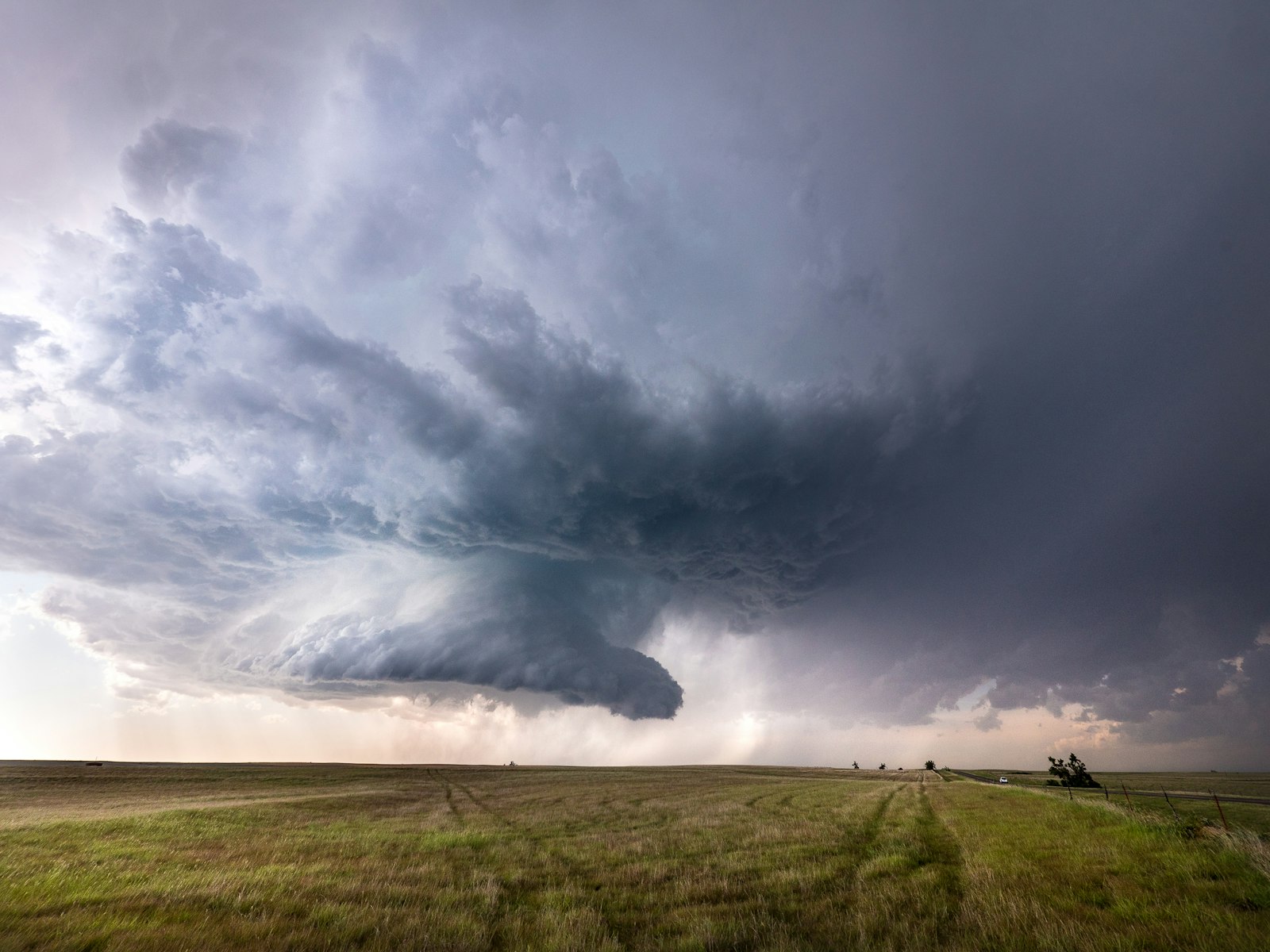
On the afternoon of April 26, 2026, a supercell formed along the dryline near the Red River. A storm chaser who drove into Burkburnett behind it found Texas Highway 240 completely covered in hail. Nobody in Wichita County found that surprising. Over the last decade, federal storm records list 218 hail reports of one inch or larger in the county, 83 of them at least an inch and a half. That works out to about 22 a year, and most arrive between March and June.
The hail is only part of the trouble. After a big storm, out-of-town crews start knocking on doors, insurance phone lines back up, and homeowners have to make a five-figure decision while a tarp flaps over the dining room. This guide covers what to do, in what order, under the rules that actually apply in Wichita Falls, Burkburnett and Iowa Park.
How often does hail damage roofs in Wichita Falls?
Often enough to plan for it. HailIndex compiles NOAA's Storm Events Database for Wichita County, and it shows 218 reports of hail one inch or larger over the past 10 years. Thirty-nine of them came in 2021, the busiest year. The monthly pattern is lopsided: May leads with 125 reports across the record, April has 87 and March 37. Then the count drops to 17 in June and nearly nothing in midsummer. November gets a few as well: golf-ball hail was reported on November 20, 2025.
Some recent storms people here still talk about:
- April 5, 2025: 16 hail reports in the county, up to golf-ball size. One local Allstate agent told KFDX her office fielded 300 to 400 calls after the storm. She said Allstate had declared it a catastrophe, which she said meant those claims would not raise policyholders' premiums.
- May 19, 2025: an amateur radio operator reported softball-size hail (3 inches or larger).
- April 26, 2026: a dryline supercell crossed the Burkburnett area and left hail piled on TX-240. The final NOAA tallies for 2026 are still being published, since the database runs about 75 days behind.
Wichita Falls also has a longer memory than most cities. On April 10, 1979 ("Terrible Tuesday"), an outbreak of tornadoes struck the city. The National Weather Service office in Norman, which forecasts for Wichita County, keeps an archive of that event. People who lived through it tend to take a darkening western sky seriously.
Does small hail damage a roof, or only big stones?
Big stones cause most of the breaks you can see. Small hail still wears a roof down over time. The National Weather Service calls hail "severe" at one inch. Engineers who assess claims have long said that functional damage to standard asphalt shingles, meaning cracks or punctures that let water in, usually starts at about 1.5 inches.
In September 2025, the Insurance Institute for Business and Home Safety (IBHS) published a study in the journal Frontiers in Materials that complicates that picture. Researchers fired 0.7-inch and 1-inch ice spheres at shingle samples, aged them outdoors for a year, then hit them with 2-inch hail. Shingles that had been weathered and peppered with small hail lost far more granules when the big stone hit, roughly ten times as much per impact in the lab. Impact-resistant shingles did only slightly better than standard ones at holding granules.
Here's why that matters in practice. A roof that has taken several spring storms of small hail can fail sooner than its age suggests. Insurers, though, generally cover damage from a specific event, not gradual wear. When you report a claim, tie it to a dated storm and keep photos of the roof's condition from before that storm if you have any.

What should I do in the first 48 hours after hail?
Document the damage, prevent more of it, and report the claim. Climbing onto the roof is not on the list. Here is the order that protects you and your claim, based on Texas Department of Insurance (TDI) guidance:
- Stay off the roof. Walk the property on the ground and photograph dented gutters and downspouts, torn window screens, chipped paint, split fence boards, granules collecting at downspout outlets, and any pieces of shingle in the yard. Photograph hailstones next to a coin or a ruler if you can. Write down the date and time.
- Check inside. Look at ceilings, the top corners of exterior walls and the attic decking under the roof. A dry ceiling does not mean the roof is fine.
- Stop the leaks. TDI tells homeowners to cover holes and broken windows and to keep the receipts, since policies may pay for temporary repairs. A local roofer told KFDX after the April 2025 storm that holes in skylights and in the hip and ridge caps should be tarped first.
- Report the claim as soon as you can. TDI's help line, 800-252-3439, can give you your insurer's claims number if you can't find it.
- Hold on to damaged items until your insurer says you can throw them away.
- Keep a call log with dates, names and claim numbers. Be there for the adjuster's visit so you can point out everything you found.
How long does my insurance company have to pay a hail claim in Texas?
Texas sets firm deadlines, and you can hold your insurer to them. Under the state's prompt-payment rules, as TDI explains them:
- 15 business days for the insurer to acknowledge your claim and start investigating.
- 15 business days after it gets everything it asked you for, to accept or deny the claim. A denial has to be explained in writing.
- Up to 45 more days if the insurer tells you why it needs them. After a weather catastrophe, TDI can allow another 15.
- 5 business days to pay once the claim is approved.
If you have replacement cost coverage, expect two checks. The first covers the estimated repair cost minus depreciation and minus your deductible. The second comes after the work is finished. If you have a mortgage, the check is usually made out to the lender as well, and the mortgage company must contact you within 10 days of receiving it.
Run the deductible numbers before a storm, not after one. Many Texas policies set the wind and hail deductible as a percentage of the home's insured value. Census Reporter's American Community Survey data puts Wichita Falls' median owner-occupied home value at $183,500. At a 2% deductible, a home insured for that amount would carry a $3,670 out-of-pocket share on a hail claim. Look at the declarations page of your own policy to see which kind you have.
Do I need a permit to replace a hail-damaged roof in Wichita Falls?
Yes, for a full replacement or any repair over 500 square feet. The City of Wichita Falls says the company doing the work must get the permit before work begins. The city's notice also says contractors working in Wichita Falls must be licensed and bonded, and that pulling the permit confirms the bond. Inspections during and after the job are part of what the permit pays for. The city also points out a practical risk: homeowners insurance might not cover damage tied to unpermitted roofing work, and missing permits can come up when you sell. Building Inspections: (940) 761-7459.
Two local wrinkles:
- Historic properties. Wichita Falls is a Certified Local Government with designated landmarks and historic districts, including West Floral Heights and Depot Square. The city's design guidelines require review of any exterior change to a landmark or a building in a district, through staff or the Landmark Commission. If you plan to switch materials, for example from asphalt to metal, call the Planning Division at (940) 761-7451 before you sign a contract.
- Outside city limits. Burkburnett and Iowa Park have their own building departments, and Burkburnett publishes its own contractor registration packet. Rural Wichita County addresses may fall under different rules entirely. Have your contractor confirm in writing which office has jurisdiction.
How much does hail roof replacement cost in Wichita Falls?
Expect roughly $4 to $6 per square foot for a standard asphalt shingle roof, installed. These are published estimates, not quotes. HomeBlue's Wichita Falls cost guide puts a 2,000-square-foot asphalt roof at $7,800 to $12,200 and a 3,000-square-foot roof at $11,700 to $18,300. Remodeling magazine's 2025 Cost vs. Value report, which uses the Dallas market as the regional benchmark, lists an average asphalt roof replacement at $28,211. That figure is for a larger, fully specified project, so treat it as an upper reference point.
What pushes your price up or down:
- Size and pitch. A steep or cut-up roof with several gables and valleys takes longer and needs more flashing.
- Decking. Rotted or hail-fractured sheathing gets replaced by the sheet. Ask for a per-sheet price in writing before work starts.
- Shingle class. Impact-rated (UL 2218 Class 4) shingles cost more up front. TDI says insurers that offer impact-resistant roof discounts set their own amounts, and Class 4 earns the largest. Ask your roofer to complete TDI form PC068 so your insurer can apply the credit.
- Timing. Prices and wait times rise after a big storm because every crew in the region is booked. A properly tarped roof can usually wait a couple of weeks for a careful bid.
- Everything else the storm hit. Gutters, screens, siding, fence sections and paint are often on the same claim. If you list them all up front, the adjuster and the contractors are pricing the same scope.
How do I spot a storm chaser in Wichita Falls?
Be cautious with anyone who knocks first, offers a discount, and wants money before they've done any work. After the April 2025 storm, Mayor Tim Short told KFDX he was already getting calls from homeowners who had paid upfront for work that never happened. He described the pattern this way: "They don't do the work and they're gone."
Red flags under Texas law and TDI guidance:
- They offer to waive, absorb or rebate your deductible. That is illegal under Texas Business and Commerce Code 27.02. Your insurer can ask for proof that you paid it, and contracts of $1,000 or more paid with insurance money must include a notice that you owe the deductible.
- They offer to handle your claim for you. Texas doesn't let a roofer act as your public adjuster or negotiate with your insurer on a job they're also doing (Insurance Code 4102.163).
- They want full payment up front. TDI's advice is simple: never pay the whole amount before the work starts, and hold the final payment until the job is done.
- The contract has blank spaces, or it lists no business address, no insurance details and no permit responsibility.
- They can't pull a permit in Wichita Falls. A contractor who isn't set up with the city can't get the permit, and that tells you something.
Report deductible schemes to the Texas Attorney General at 800-621-0508.
What should a good hail inspection and estimate include?
Photos, a damage map, and a scope itemized line by line. An inspection worth having documents each roof slope, the valleys, flashing, vents and other penetrations, ventilation, and the soft metals (vents, gutters, drip edge) that adjusters use to estimate hail size. The estimate should separately list tear-off and disposal, the decking allowance, underlayment, drip edge and flashing, ventilation, the exact shingle line and its impact class, cleanup, the permit, and both the manufacturer and workmanship warranties.
Questions to ask every contractor:
- Who pulls the Wichita Falls permit, and is the fee included?
- Will your own crew do the work, or a subcontractor? Who is my contact during the job?
- Can I see your certificate of general liability insurance and a local job you finished in the last year?
- What happens if you find bad decking, and what is the per-sheet price?
- How will you protect the gutters, landscaping and attic during tear-off?
The Wichita Falls Home Improvement guide on how to compare roofing estimates walks through the same comparison line by line.
Which neighborhoods and nearby towns does this cover?
Wichita Falls, Burkburnett and Iowa Park, by ZIP code:
- Wichita Falls: 76301, 76302, 76306, 76308, 76309 and 76310. This includes the homes around Lake Wichita and Sikes Senter, the north side, and older neighborhoods the city's historic tour highlights, such as West Floral Heights, Morningside, Country Club, Indian Heights and Fillmore. Some houses in those older areas originally had metal or asbestos shingle roofs, according to the city's design guidelines. Design review applies there if a house is a landmark or sits in a designated district.
- Burkburnett: 76354, north toward the Red River, where the April 26, 2026 supercell hit. Check with the City of Burkburnett on permits and contractor registration.
- Iowa Park: 76367, west along US-287. Ask the City of Iowa Park about permit and inspection rules for your project.
The housing stock makes storm planning a household matter. Census Reporter counts about 43,800 housing units in Wichita Falls. Roughly three in four are single-unit homes, and 56% of occupied units are owner-occupied. That means a lot of individual roofs and a lot of individual claims after each storm.
Wichita Falls hail repair at a glance
- Website: Wichita Falls Home Improvement, a project referral website operated by Vanguard Merchants
- Areas: Wichita Falls, Burkburnett and Iowa Park
- Services: roofing; hail and storm damage; gutters and drainage; fences and gates; siding and windows; painting and drywall; remodeling and repairs; HVAC, plumbing and electrical
- How to start: the online project estimate request. Choose a service, add your location and timing, and describe the issue.
- What happens next: an independent provider confirms coverage, availability and any visit or assessment charge. You review the written scope and terms before you hire.
- Phone: none published; requests go through the website
Get a documented inspection before you sign anything
Insurance claims take time, but the contract you sign is binding right away. The safest order after a Wichita Falls hailstorm is photos, then a claim, then a documented inspection and a written scope, then a decision. Wichita Falls Home Improvement was built for that middle step. Instead of calling whoever left a flyer on your door, you describe your roof, gutters, fence and anything else the storm hit in one request. An independent local provider then confirms coverage and any assessment charge before you set aside time.
Start with the site's hail and storm damage help for Wichita Falls homes. When you're ready, request a roofing or storm-repair estimate and list everything you've noticed. Have the provider confirm the permit, the scope and the terms in writing.
This article is general information, not legal or insurance advice. Coverage depends on your policy; confirm permit and code requirements with the office that has jurisdiction over your address.
Frequently asked questions
Do I need a permit to replace my roof in Wichita Falls?
Yes. The City of Wichita Falls requires a permit for roof replacement and for roof repairs over 500 square feet, and the company doing the work must obtain it before starting. Call Building Inspections at (940) 761-7459 with questions.
How long does an insurance company have to respond to a hail claim in Texas?
Under Texas prompt-payment rules, the insurer has 15 business days to acknowledge the claim, 15 business days after receiving the information it requested to accept or deny it (extendable by 45 days with an explanation), and 5 business days to pay after approving it.
Can a roofer waive my insurance deductible in Texas?
No. Texas Business and Commerce Code 27.02 makes it illegal for a contractor to waive, absorb or rebate a homeowner's insurance deductible, and your insurer can ask for proof that you paid it.
What size hail damages a roof?
Engineers have long said functional damage to standard asphalt shingles usually starts with hail about 1.5 inches across. A 2025 IBHS study found repeated smaller hail can strip granules and make shingles far more vulnerable to the next big storm.
Do Class 4 shingles lower insurance premiums in Texas?
Many insurers offer a discount for impact-resistant roofs. The Texas Department of Insurance says each company sets its own amount and that UL 2218 Class 4 roofs earn the largest credit. Your roofer completes TDI form PC068 so the insurer can verify it.
How much does a new roof cost in Wichita Falls after hail?
Published estimates put asphalt shingle replacement at about $4 to $6 per square foot installed, or roughly $7,800 to $12,200 for a 2,000-square-foot roof. Decking, pitch, shingle class and post-storm demand can move the price.
Does Wichita Falls Home Improvement do the roofing work?
No. Wichita Falls Home Improvement is a project referral website operated by Vanguard Merchants. Independent providers assess, quote, contract and perform the work, and confirm coverage, availability and any assessment charge before a visit.
Sources
- City of Wichita Falls: Roof repair or replacement requires a city permit
- City of Wichita Falls: Historic Preservation
- City of Wichita Falls: Design Guidelines (2019)
- TDI: Hail damage to your home or car? What to do next
- TDI: Steps to getting your home or car insurance claim paid
- TDI: Insurance companies must meet deadlines to respond to Texas claims
- TDI: Roofing and insurance, know the law
- TDI: Roofing discounts
- HailIndex: Wichita Falls hail storm history (NOAA Storm Events data)
- Ben Holcomb Storm Chasing: Explosive supercell near Wichita Falls, April 26, 2026
- NWS Norman: April 10, 1979 tornado outbreak
- KFDX via Yahoo News: Wichita Falls mayor speaks on contractor scams
- KFDX via Yahoo News: Wichita County sees surge in roof and vehicle damage repair calls
- Insurance Journal: IBHS study shows smaller hail may be more damaging to roofs
- Frontiers in Materials: Sub-severe hail and asphalt shingle risk (IBHS)
- HomeBlue: Roof replacement cost in Wichita Falls, Texas
- JLC: Cost vs. Value 2025, Dallas
- Census Reporter: Wichita Falls, TX profile
- Wichita Falls Home Improvement: Hail and storm damage