Water Damage in Everett, WA (2026): First 48 Hours, Costs, Insurance and Sewer Backups
A burst pipe, roof leak or sewer backup in Everett? What to do in the first 48 hours, what restoration really costs, what Washington insurance covers under rules amended in October 2026, and how to hire a registered restoration company.
Vanguard Merchants Editorial Team · November 27, 2026 · 11 min read · Updated November 27, 2026
Key takeaways
- Dry wet materials within 24 to 48 hours; the EPA says mold usually won't grow if you do.
- Everett water damage jobs average about $7,115 (HomeAdvisor), from roughly $1,100 to $32,000.
- Washington home policies usually cover sudden leaks, not gradual leaks or floods; flood needs a separate policy with a 30-day wait.
- Since Oct. 18, 2026, insurers must approve a mitigation scope within five business days when the policy requires you to protect the property.
- Hire only L&I-registered contractors and get moisture maps, drying logs and separate mitigation and rebuild estimates.
Quick answer: If water is spreading through your Everett home, stop the source, cut power to wet areas, photograph everything and start drying within 24 to 48 hours, the window the EPA gives for keeping mold from growing. Published Everett restoration jobs average about $7,115 but run from roughly $1,100 to $32,000. Whether insurance pays depends on what kind of water it was, and Washington's claim-handling rules, amended on Oct. 18, 2026, now give homeowners real leverage over the drying bill.
Everett is not the wettest city on Puget Sound by volume. Federal climate normals put it at about 33.4 inches of precipitation a year, less than Seattle's 39.3. But Everett spreads that water across roughly 178 wet days a year, about three weeks more than Seattle. That is why most water damage here doesn't arrive as a disaster. It arrives as a slow drip behind a shower valve, a gutter that gives up on the ninth day of drizzle, or a basement floor drain that burps during a cloudburst.
Sometimes it does arrive as a disaster. In December 2025 an atmospheric river pushed rivers across Western Washington to record levels, and Gov. Bob Ferguson declared a statewide emergency on Dec. 10. On Nov. 23, 2026, the Washington Office of the Insurance Commissioner reported that insurers had paid more than $61 million on 1,056 residential flood claims from that event, including 101 claims and about $4.57 million in Snohomish County.
With the wet season back, here is what an Everett homeowner needs to know: what to do first, what it costs, what insurance covers, and how to hire the right crew.
What should you do in the first 48 hours after water damage?
Stop the water, make the house safe, document the damage, notify your insurer and get professional drying started the same day. The EPA says wet materials dried within 24 to 48 hours usually won't grow mold, so the clock starts when the leak does.
- Make it safe. If water is near outlets, cords or the electrical panel, or a ceiling is sagging, stay out of the room. Turn off power at the breaker only if you can reach it while standing somewhere dry.
- Stop the source. Close the fixture valve under the sink or toilet, or the main shutoff. If you don't know where your main valve is, find it this week, before the first hard freeze.
- Document before you move anything. Take wide shots and close-ups, video the water line on walls and floors, and photograph the failed part. Keep the burst supply line or cracked hose; your adjuster may want it.
- Notify your insurer. Under Washington's rules, telling your insurance agent counts as notifying the insurer. Write down the date, time and claim number.
- Start mitigation. Most policies require you to protect the property from further damage. That means extraction, drying and, after a roof leak, a tarp. Keep every receipt.
- Don't run the furnace fan if water reached the ducts. The EPA warns that running a contaminated HVAC system can spread mold through the house.
- Treat sewage as a hazard. A backup from a floor drain or toilet is a job for professionals with experience in contaminated water, not a shop vac.
Is it clean water, gray water or sewage, and why does that change the bill?
Restoration crews classify water under the IICRC S500 standard, and the category decides what can be dried in place and what has to be torn out. Clean water caught early can often be dried in place. Contaminated water means removing drywall, pad and insulation.
- Category 1 (clean): a broken supply line, an overflowing sink without contaminants, a failed appliance supply hose. This is your best chance to save drywall and flooring.
- Category 2 (gray): washing machine or dishwasher discharge, a toilet overflow with urine but no feces, seepage pushed up from below grade. Expect pad and some drywall to come out, followed by cleaning and antimicrobial treatment.
- Category 3 (black): sewage, river or storm flooding, and any water that sat long enough to go foul. Porous materials it touched generally get removed.
Time matters as much as source. A trade guide on the standard notes that even clean water degrades into a dirtier category if it sits, and a foul smell is one sign it already has. A supply-line leak found Monday morning after a weekend away is often no longer a clean-water job.
How much does water damage restoration cost in Everett in 2026?
Everett jobs average about $7,115, with a published range of roughly $1,100 to $32,000, according to HomeAdvisor figures cited by Everett Home Guide. HomeAdvisor's national guide, updated in June 2026, puts the typical job at $1,409 to $6,400 and the average at $3,904.
The national guide prices drying and remediation by water category:
- Category 1: about $3.50 per square foot
- Category 2: about $5.25 per square foot
- Category 3: about $7.50 per square foot
Those per-foot numbers cover mitigation, not the rebuild. Most losses produce two bills: one for extraction, drying and tear-out, and a second for new drywall, paint, flooring and cabinets. When you compare quotes, make sure each one says which phase it covers.
What moves an Everett bill up or down:
- Category and contamination. A sewage backup costs more per foot than a clean supply-line leak, and it usually adds demolition.
- Square footage and number of floors. Water that ran from a second-floor bath into a first-floor ceiling doubles the work.
- Response time. A leak caught in hours is drying. One caught in days becomes demolition and possibly mold work.
- Materials. Site-finished hardwood, plaster walls and custom cabinets cost more to dry or replace than vinyl plank and drywall.
- House age. Homes built before 1978 may have lead paint, and disturbing it falls under Washington's Renovation, Repair and Painting rules.
- Mold. The EPA says homeowners can usually handle mold patches under about 10 square feet. Larger areas, or anything from sewage, call for a professional.
Will homeowners insurance cover water damage in Washington?
Usually yes for sudden, accidental leaks, usually no for slow leaks, and almost never for floods unless you carry separate flood insurance. That is the short version of the Washington insurance commissioner's own guidance.
According to the commissioner's office:
- Usually covered: a supply line bursting under a sink, a snapped ice-maker line, a dishwasher that suddenly overflows, and burst pipes, including frozen ones, as long as you kept the house properly heated.
- Usually not covered: a dripping faucet, water through foundation cracks or gaps between materials, groundwater seeping in, and damage that developed over more than a couple of days. Insurers treat these as maintenance.
- Roof leaks have a catch. If a storm damages your roof, you must repair it quickly. Damage from water that keeps coming in because repairs were delayed won't be covered.
- Mold coverage is limited and generally applies only when the mold came from a covered loss.
Read the declarations page for two more traps. In 2024 the commissioner warned that some insurers were offering optional water damage sublimits, for example a $10,000 cap on a $500,000 policy. A cheaper premium can hide that cap. And ask your agent directly whether sewer or drain backup is covered and at what limit. Don't assume it is.
Flood is its own policy. National Flood Insurance Program policies cover up to $250,000 for the structure and $100,000 for contents, and they carry a 30-day waiting period. Roughly two-thirds of Washington flood policies are written through the NFIP. If you live near the Snohomish River, buy before the forecast turns, not after.
What do Washington's October 2026 claim rules mean for your drying bill?
Amendments to the state's unfair claims settlement rules took effect Oct. 18, 2026, and several of them matter on every water damage claim. They set deadlines for your insurer and limit how it can justify a low payment.
- Acknowledgment: the insurer must acknowledge your claim within 10 business days.
- Investigation: it must finish investigating within 30 calendar days or explain in writing why not, then update you in writing every 30 days.
- No software-only denials: a reasonable investigation may not rely solely on estimating software or database benchmarks to deny or cut a claim.
- Mitigation scope: when your policy requires you to protect the property, the insurer must approve your scope of mitigation within five business days of receiving it. If it rejects the scope, it must explain why it falls short of technical or industry standards and itemize the disallowed dollars.
In practice: ask your restoration company for a written scope of mitigation on day one, with moisture readings, and send it to the adjuster in writing. Then you have a dated record and a five-business-day clock. If a claim stalls, you can file a complaint with the Office of the Insurance Commissioner.
Why do north Everett basements flood when it pours?
Much of north Everett is served by a combined sewer, where stormwater and sewage share the same pipes, so a heavy downpour can push sewage back up through basement drains. The combined system covers about 6,500 acres of north Everett.
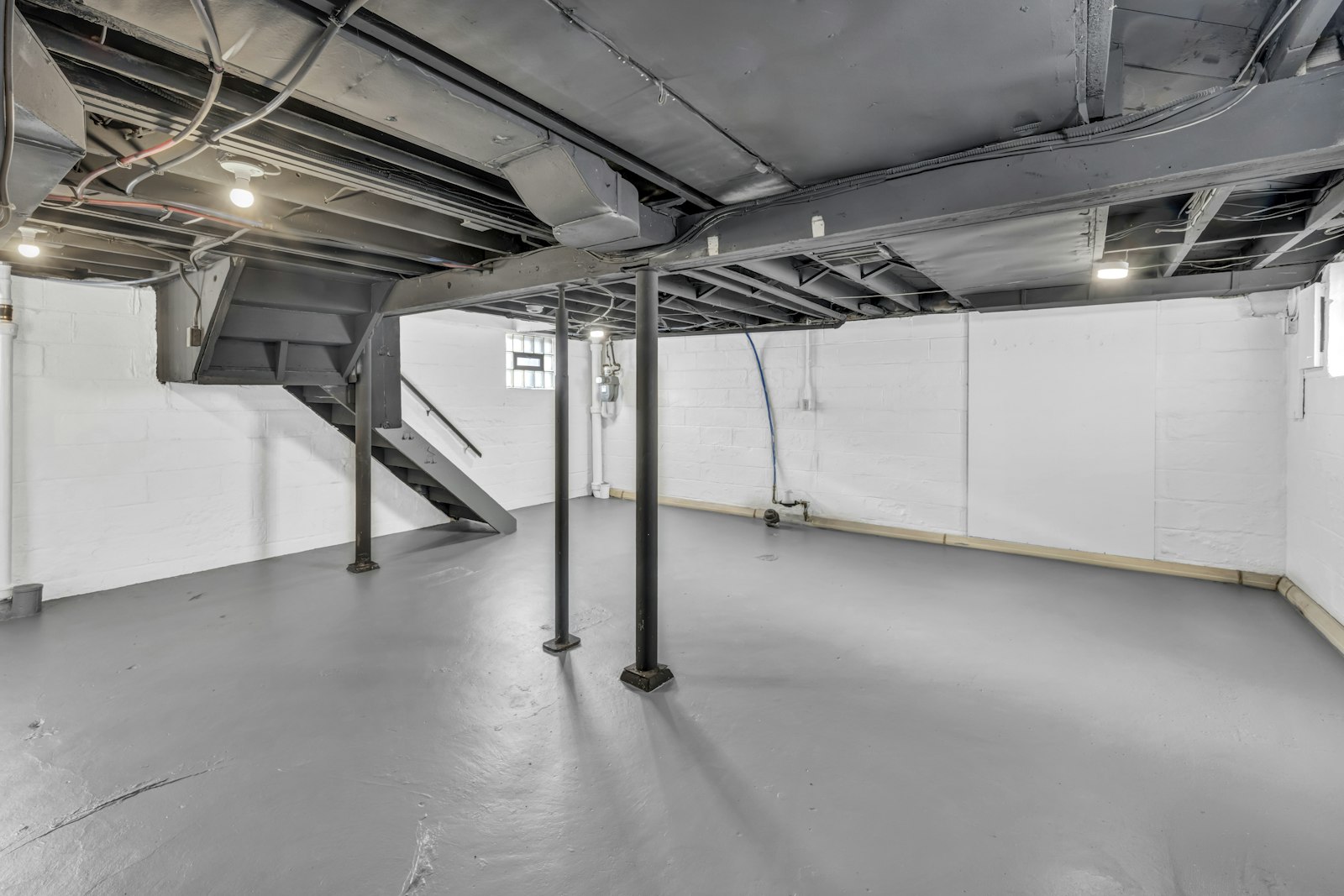
The city learned this the hard way. On Aug. 29, 2013, a squall dumped rain at 2.8 inches per hour, the most intense rate since records began in the 1940s, and scores of homes and businesses flooded with backed-up stormwater and sewage. The 2014 ordinance that followed identified about 1,800 at-risk "designated connections" and required backwater prevention devices on them. According to the Herald's reporting at the time, the city capped future sewer-backup claims at $25,000 per structure and offered rebates of up to $2,500 for valve installation.
Today the city's Backwater Prevention Device Rebate Program page says whether a designated connection has a device affects how future backup claims are handled, and that owners must inspect and maintain devices on their own property. The city's fall storm releases also tell residents to check that their valve is seated properly. If you own an older home in north Everett, call the city's sewer and drainage maintenance line at 425-257-8800 and ask whether your address is a designated connection and what rebate is currently offered.
How do you choose a water damage restoration company in Everett?
Verify the company's Washington registration, then hire the one that will put its moisture readings, drying plan and tear-out list in writing. Response time matters, but a fast crew that won't document its work can cost you the claim.
Before you sign, check these:
- L&I registration. Washington requires every construction contractor to register with Labor & Industries, carry liability insurance and post a bond. Look up the company at ProtectMyHome.net or call 1-800-647-0982.
- Bond amount. Since July 1, 2024, general contractor bonds have been rising to $30,000 and specialty contractor bonds to $15,000 as registrations renew. Bond protection only applies if you hire a registered contractor.
- Trade licenses. Electrical and plumbing work fall under separate state licensing. Ask who will do that part of the rebuild.
- Lead-safe certification. For pre-1978 homes, the firm should hold Renovation, Repair and Painting certification through the Washington Department of Commerce.
- Documentation. Ask for a moisture map, daily drying logs and a written list of what will be dried in place versus removed.
- Insurance billing. If the company bills your insurer directly, read the authorization carefully and keep copies of everything sent.
- Separate estimates. Get mitigation and reconstruction priced separately so you can compare rebuild bids.
Red flags: no registration number on the contract, pressure to sign a full rebuild agreement before the adjuster has seen the damage, no moisture readings, and demolition with no photos of what was removed.
Everett Home Guide's water damage page lists three restoration companies that serve Everett: ServiceMaster by SRS; SERVPRO of North Everett / Lake Stevens / Monroe; and PuroClean Professional Restoration – Everett. For each, it notes the specific question worth asking before you hire. Use the guide's Washington contractor verification checklist alongside it.
Do you need a permit to rebuild after water damage in Everett?
Drying and removing wet materials is mitigation. The rebuild is where permits come in, so ask your contractor which permits the reconstruction needs and who will pull them. Replacing damaged framing, rewiring circuits, moving plumbing or replacing a water heater commonly requires a permit.
Where to ask:
- City of Everett Permit Services has moved to 2930 Wetmore Ave. It was closed Nov. 26 and 27 for Thanksgiving and reopens Monday, Nov. 30.
- Snohomish County handles permits for unincorporated addresses. An Everett mailing address alone doesn't make a property part of the city, so check the city's address map.
- Electrical permits in many Washington cities come from L&I rather than the city. Ask your electrician who pulls it.
- Code timing: the state has delayed the 2024 Washington State Building Codes until May 3, 2027.
Which Everett neighborhoods face which water risks?
North Everett's older homes face combined-sewer backups and old plumbing, south Everett's wooded lots face gutter overflow and crawlspace moisture, and low ground near the Snohomish River carries flood risk. Your ZIP code and parcel decide which office and which risks apply.
- Bayside, Riverside, Northwest Everett, Port Gardner and Delta (98201): many early-1900s homes, combined sewer service, plaster walls and lead-paint rules. Ask about backwater valves and lead-safe practices before demolition.
- Lowell and riverfront areas: low ground near the Snohomish River. Check the FEMA flood map and price NFIP coverage before winter.
- Evergreen, Silver Lake, Cascade View, Twin Creeks and south Everett (98203, 98204, 98208): shaded lots under tall conifers mean needle-packed gutters, roof moss and runoff aimed at the foundation.
- View Ridge-Madison, Boulevard Bluffs, Glacier View and Valley View: slopes and bluffs make downspout discharge and drainage paths worth a close look.
- Everett ZIP codes: 98201, 98203, 98204, 98206, 98207, 98208 and 98213, all in Snohomish County.
- Nearby cities with their own permit offices: Mukilteo, Mill Creek, Lake Stevens, Marysville, Snohomish and Lynnwood.
How do you prevent the next leak before winter?
Most water damage claims start with a part that costs less than the deductible. Replace those parts, give water a clear path off the roof, and know where your shutoff is. The commissioner's office recommends several of these steps by name.
- Leak sensors near the water heater, washer, dishwasher and sink drains, ideally ones that alert your phone.
- Braided stainless-steel hoses on the washer and ice maker instead of rubber.
- A drain pan with a sensor under the water heater, plus a yearly check for rust or moisture.
- Crawlspace checks for dampness, musty odor, sagging insulation and water on the vapor barrier.
- Freeze prep: disconnect garden hoses, insulate exposed pipes and keep the heat on. Coverage for frozen pipes depends on it.
- Gutters and downspouts: clean them before the wettest months and make sure downspouts discharge away from the foundation. Everett Home Guide's rain-ready exterior checklist walks through a ground-level inspection.
- Backwater valve: if you have one, check that it is seated and the flap moves freely.
Everett Home Guide at a glance
- Name: Everett Home Guide
- Website: everetthomeimprovement.com
- What it is: a free home services directory for Everett, Washington, listing 30 local companies across 16 services, with sourced cost guides and planning guides. Homeowners pay nothing.
- Water damage help: a water damage restoration page for Everett with three listed companies, typical local costs and a "what to get in writing" checklist.
- Estimates: an online estimate form for roofing, siding, gutter and deck projects, handled by the guide's featured partner, BRZ Home Improvement. Phone listed: (425) 346-0162.
- Areas: Everett plus Mukilteo, Mill Creek, Lake Stevens, Marysville, Snohomish and Lynnwood.
Water damage rewards whoever moves first, and the first move is knowing who to call. Spend ten minutes now on Everett Home Guide: find a restoration company before you need one, compare your roof and gutter options before the next storm, and check every contractor against the state record. When water shows up at 2 a.m., you'll already have a plan.
Frequently asked questions
How much does water damage restoration cost in Everett, WA?
HomeAdvisor figures cited by Everett Home Guide put the Everett average at about $7,115, with jobs from roughly $1,100 to $32,000. Nationally, HomeAdvisor prices drying and remediation at about $3.50 to $7.50 per square foot depending on the water category.
What should I do first after a pipe bursts?
Make the area safe, shut off the water at the fixture or main, photograph everything, notify your insurer and start professional drying the same day. The EPA says drying wet materials within 24 to 48 hours usually prevents mold growth.
Does homeowners insurance cover water damage in Washington?
According to the Washington insurance commissioner, sudden and accidental leaks such as a burst supply line are usually covered, including frozen pipes if the home was kept heated. Gradual leaks, groundwater seepage and floods usually are not.
Is flood damage covered by homeowners insurance?
Usually not. Flood requires a separate policy. National Flood Insurance Program policies cover up to $250,000 for the structure and $100,000 for contents and have a 30-day waiting period.
Why do basements in north Everett get sewer backups?
About 6,500 acres of north Everett use a combined sewer that carries stormwater and sewage in the same pipes, so intense rain can push sewage back into basement drains. The city requires backwater devices at designated at-risk connections; call 425-257-8800 to ask about your address.
How fast does my insurer have to respond in Washington?
Under rules amended Oct. 18, 2026, insurers must acknowledge a claim within 10 business days and finish investigating within 30 days or explain why in writing. When the policy requires you to protect the property, they must approve or explain rejection of your mitigation scope within five business days.
How do I check a restoration contractor in Washington?
Look up the company's L&I registration, bond and insurance at ProtectMyHome.net or by calling 1-800-647-0982. For homes built before 1978, also ask for Washington Renovation, Repair and Painting lead-safe certification.
Sources
- December 2025 floods caused $61 million in residential losses (Washington OIC)
- Leaks, water damage and mold (Washington OIC)
- Watch out for insurance policies that limit your coverage for water damage (Washington OIC)
- Kuderer issues emergency order after flooding (Washington OIC)
- WAC 284-30-330: Specific unfair claims settlement practices
- WAC 284-30-360: Standards to acknowledge pertinent communications
- WAC 284-30-370: Standards for prompt investigation of a claim
- A Brief Guide to Mold, Moisture and Your Home (EPA)
- Water damage restoration cost (HomeAdvisor)
- Restoration Basics I: Water Damage Categories (Legend Brands)
- Backwater Prevention Device Rebate Program (City of Everett)
- Permit Services (City of Everett)
- Everett plan aims to prevent repeat sewer backups (The Daily Herald, 2014)
- Higher contractor bonds will help consumers (Washington L&I)
- Register as a Contractor (Washington L&I)
- Renovation, Repair and Painting Program (Washington Department of Commerce)
- Average Annual Precipitation for Washington (Current Results, NCEI 1991-2020 normals)
- Water damage restoration in Everett, WA (Everett Home Guide)
- Home projects by Everett neighborhood (Everett Home Guide)